
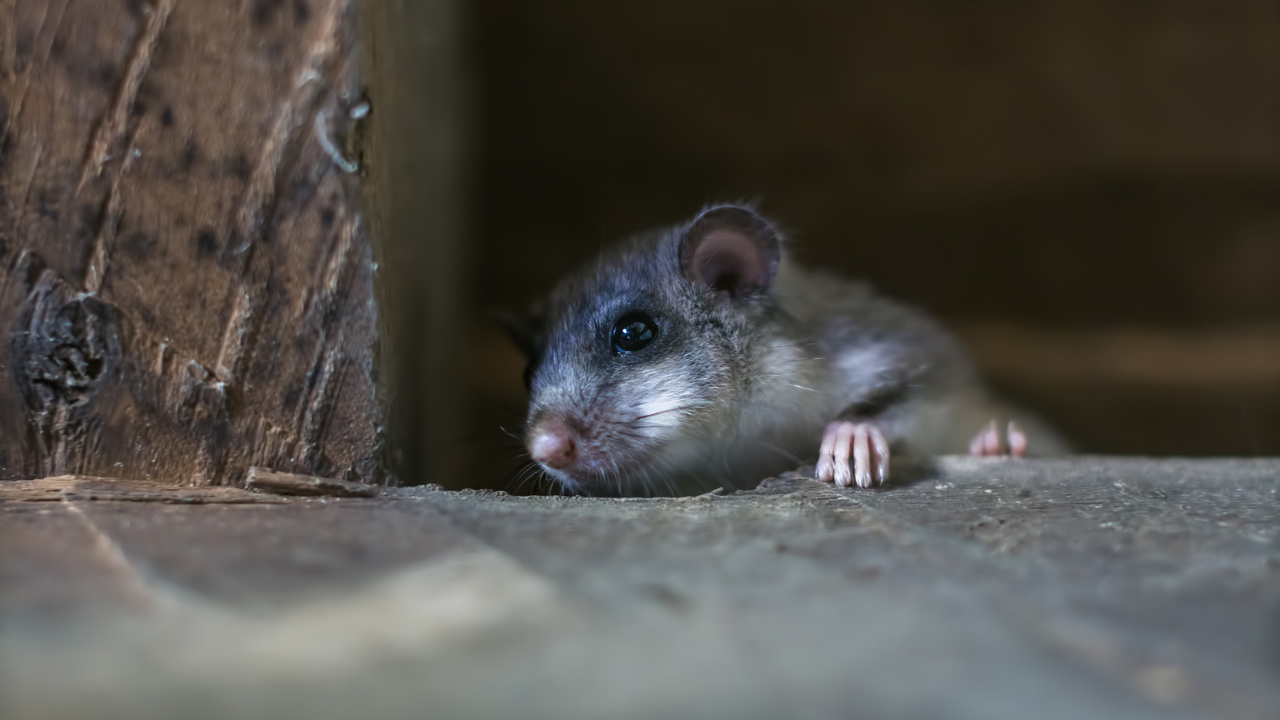
Scratching above the ceiling after dark, droppings along the joists and flattened or tunnelled insulation are the clearest signs of rats in attic spaces. They will not leave on their own. The fix is to find where they are getting in, seal those gaps, trap the rats already inside, and keep checking until the activity stops.
Fall is when this starts in earnest. Once the nights cool off in Abbotsford, Chilliwack, Langley and Maple Ridge, rats go looking for somewhere warm and dry to spend the winter, and a quiet attic full of insulation is about as good as it gets. Here is how to confirm what you are hearing, why it is worth acting quickly, and what actually works.
BC has two rat species, the Norway rat and the roof rat, and both turn up across the Fraser Valley. Roof rats are slim, agile climbers that prefer to live up high, so attics, ceiling voids and upper walls are their natural territory. Norway rats are heavier and usually nest at ground level, in crawl spaces, under decks and along foundations, but they climb well enough to follow wall cavities upward.
Rats do not hibernate. As the weather turns, food outside gets harder to find and they look for shelter close to a reliable meal. An attic gives them warmth rising from the house below, soft insulation to nest in, and almost no disturbance.
The local landscape helps them along. Mature trees, cedar hedges, ivy on walls and backyard fruit trees are common across the Valley, and each one is a route to the roof. Homes near barns, feed storage or chicken coops see extra pressure, because those food sources keep local rat numbers high all year. For the bigger picture, our look at why rats are invading Fraser Valley homes this winter covers the seasonal pattern.
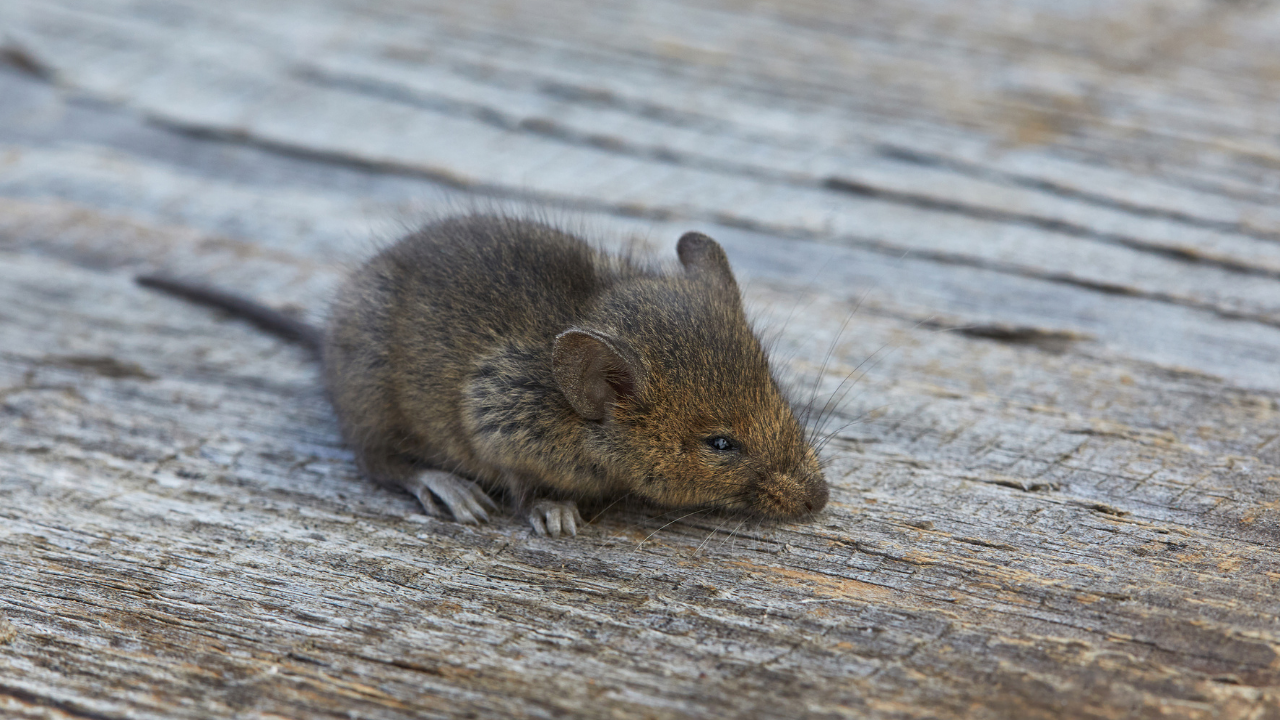
You do not need to see a rat to know you have one. Look and listen for:
Droppings tell you more than you might expect, including which species you are dealing with. Our guide to identifying rat droppings walks through the differences.
Plenty of attic noise turns out to be squirrels or mice, and each needs a different approach, so it is worth narrowing it down.
Timing is the biggest clue. Rats are most active at night. Squirrels keep daytime hours and are usually loudest in the early morning and late afternoon. If the racket starts after you go to bed, rats are the likely suspect.
Weight is the next clue. Rats sound heavy, with thuds, dragging and running. Mice are much lighter, more of a faint, quick patter.
Droppings settle it. Mouse droppings are tiny, around 3 to 6 mm, about the size of a grain of rice. Rat droppings are 12 to 20 mm. Squirrel droppings fall in a similar range to rats but are more barrel shaped, lighter brown, and tend to collect near the entry point rather than along a route.
This matters because squirrels are usually handled with exclusion doors that let them leave but not return, while rats need trapping and sealing. Treat the wrong animal and the noise carries on.
It is tempting to wait and see whether the noise stops. It almost never does, and the cost goes up the longer they stay.
Wiring is the main concern. Rats gnaw constantly to keep their teeth worn down, and electrical wiring in an attic is an easy target. Stripped wire is a genuine fire risk, and it is often buried under insulation where nobody sees it.
Insulation takes a beating too. Rats tunnel through it, compress it and soak it with urine and droppings. That reduces how well it holds heat and leaves contamination behind that does not go away when the rats do.
Then there is health. Rat droppings and urine can carry leptospirosis and salmonella, and the attic sits directly above where your family sleeps.
Finally, rats breed fast. Under good conditions a pair can produce a litter every three weeks or so, which is how a couple of animals in September becomes a colony by January.
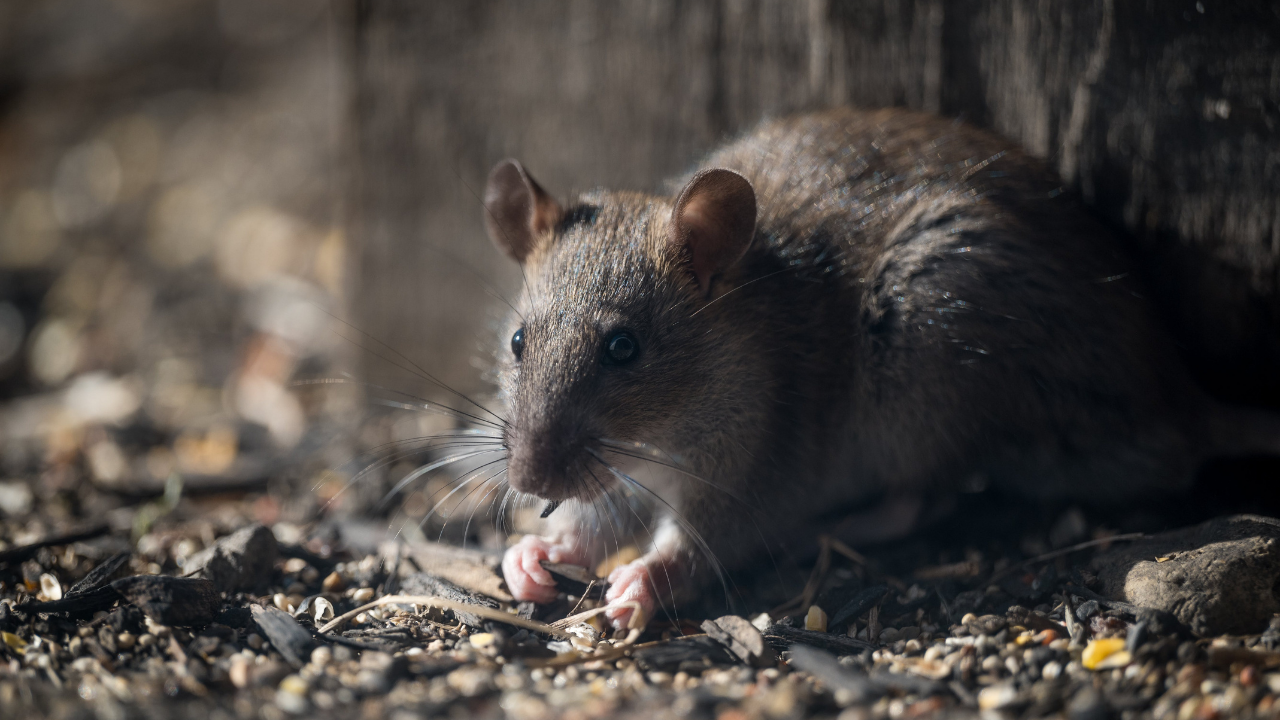
Effective rat control is a sequence, not a single trap. Skip a step and you will be doing it again in a month.
Inspect from the outside first. Walk around the house and look at the roofline, soffits, fascia, roof and gable vents, plumbing stacks, and anywhere cables or pipes enter. Check where gutters, downspouts and fences give rats a ladder to the roof. Any gap a quarter inch or larger is big enough to matter.
Cut off the highways. Trim branches back at least six feet from the roof, pull ivy off exterior walls, and clear stacked wood and clutter away from the house. Pick up fallen fruit and keep bird seed and pet food sealed.
Seal with the right materials. Rats chew through foam, plastic and wood. Use hardware cloth or metal flashing over larger openings, and steel wool packed in with caulk for small gaps. Timing matters: sealing everything while rats are still inside can leave them trapped in wall voids, where they chew new exits or die out of reach. Sealing and trapping need to happen together, with checks until the attic goes quiet.
Trap, do not poison. Snap traps set along joists and runways, ideally inside tamper resistant stations, are the safest and most reliable option in an attic. Poison is a poor choice indoors, because a poisoned rat often dies inside a wall or ceiling where the smell lingers for weeks. BC has also put permanent provincial restrictions on the strongest rodenticides, which can no longer be used in residential settings because of the risk to owls and other wildlife.
Monitor until it is quiet. Check traps regularly, reset them, and watch for fresh droppings. Clean a section of joist and look again a few days later. New droppings mean the job is not finished.
Clean up carefully. Never sweep or vacuum dry droppings, because that puts contaminated dust into the air. Ventilate the space first, wear gloves and a mask, and wet the droppings with disinfectant before wiping them up. Insulation that is heavily soiled with droppings and urine usually needs to come out, and that is a job for a professional with proper protective gear.
DIY can work for a single rat that came in through one obvious gap. It is time to call when:
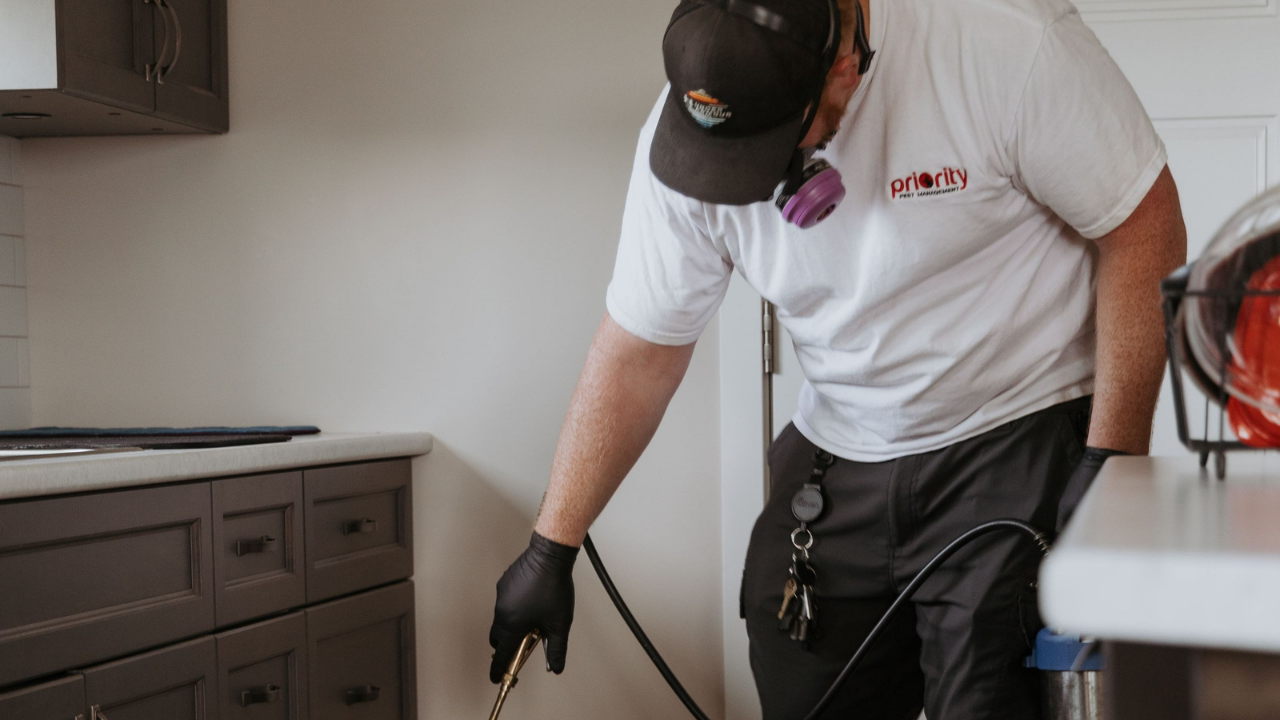
Priority Pest Management starts every rat job with a free inspection to find the entry points and nesting areas. Accessible entry points are sealed, tamper resistant traps go into the high activity areas, and two return visits follow to check the traps and confirm the problem is resolved. Non toxic options are available, and you get a clear price before any work begins. We provide rodent control in Abbotsford and across the Fraser Valley.
Rats in attic spaces do not leave on their own, and every week they stay means more droppings, more chewed wiring and a bigger colony. The good news is that the fix follows a clear pattern: find the way in, close it, remove the rats, and confirm it is over. Acting in the fall beats dealing with a full infestation in February.
If you are hearing scratching overhead, book your free inspection with Priority Pest Management or call 604-613-2015.
How can I tell if I have rats in attic spaces or squirrels?
Listen to when the noise happens. Rats are active at night, while squirrels are busiest in the early morning and late afternoon. Rat droppings are dark, 12 to 20 mm long and spread along travel routes, while squirrel droppings are lighter brown and usually gather near the entry point.
Will rats leave the attic on their own?
Almost never. As long as the attic stays warm, dry and close to food, rats have every reason to stay, and they breed quickly enough that a small problem grows through the winter. Getting rid of them takes trapping, sealing and return checks.
Can rats in the attic get into the rest of the house?
Yes. Rats travel through wall cavities and the gaps around pipes, wiring and ductwork, so attic activity can spread to upper walls, cupboards and eventually the kitchen. Droppings in living areas are a sign the population is outgrowing the attic.
Is it safe to use rat poison in the attic?
It is not a good idea. Poisoned rats often die inside walls or ceilings where they cannot be reached, and the smell can last for weeks. BC restricts the strongest rodenticides in residential settings, and traps combined with sealed entry points give more reliable results.
Do I need to replace my attic insulation after rats?
It depends on how long they were there and how much they soiled it. Light activity in a small area can often be cleaned up safely, but insulation saturated with droppings and urine generally needs to be removed and replaced by a professional. Never sweep or vacuum dry droppings, since that spreads contaminated dust.
How long does it take to get rid of rats in the attic?
It depends on how many rats there are and how many entry points the house has. Most of the work happens on the first visit, when entry points are sealed and traps are set, and return visits confirm the attic has gone quiet. A free inspection is the quickest way to get a realistic timeline for your home.
Our Support and Sales team is available
24 /7 to answer your queries

