
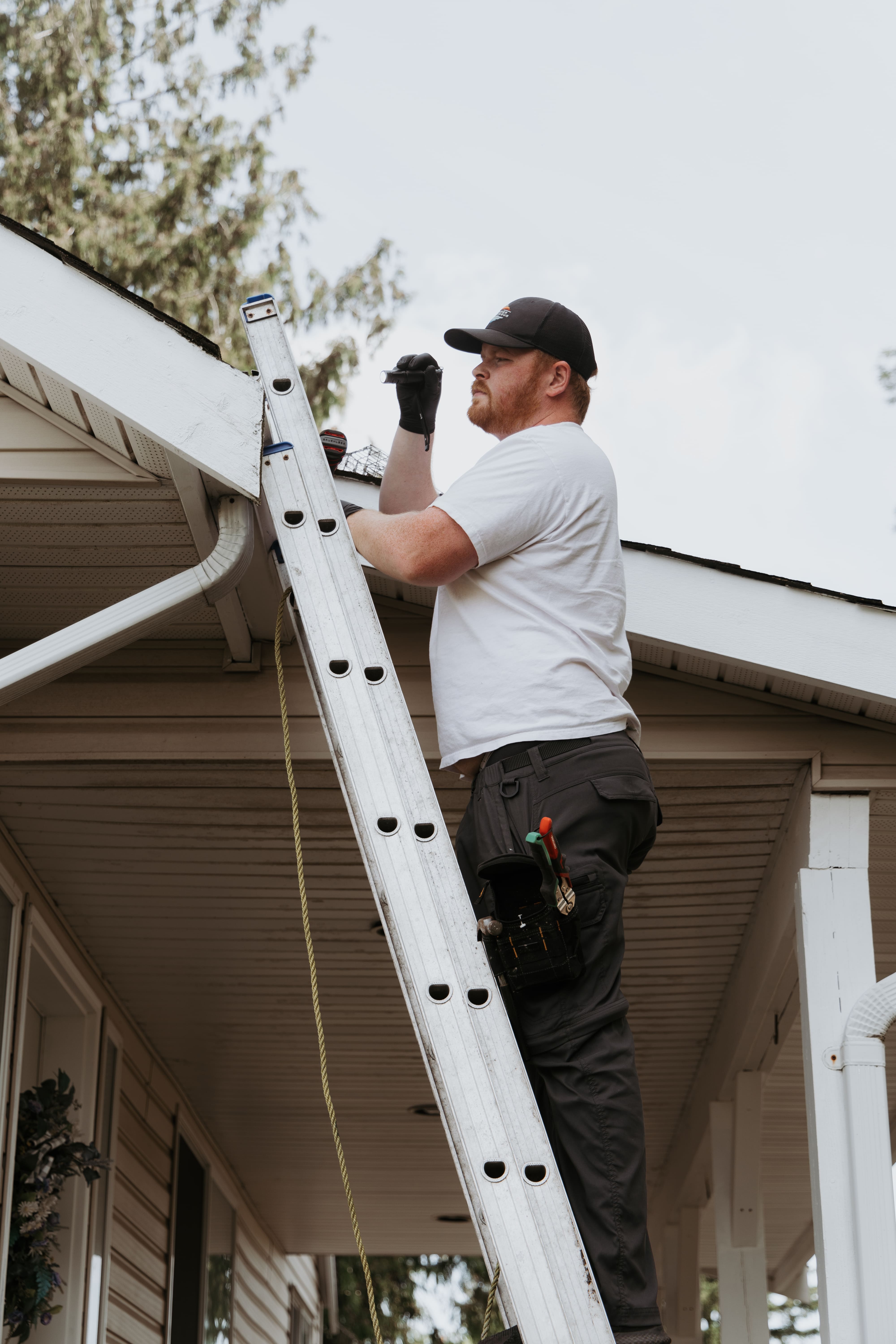
Nest under the eaves? Wasps coming and going through a gap in the siding? Priority Pest Management provides wasp control in Abbotsford for homeowners who would rather not take a can of spray up a ladder. We identify the species, remove the nest properly, and close the access point so next spring's queen builds somewhere else.
Request Our Service
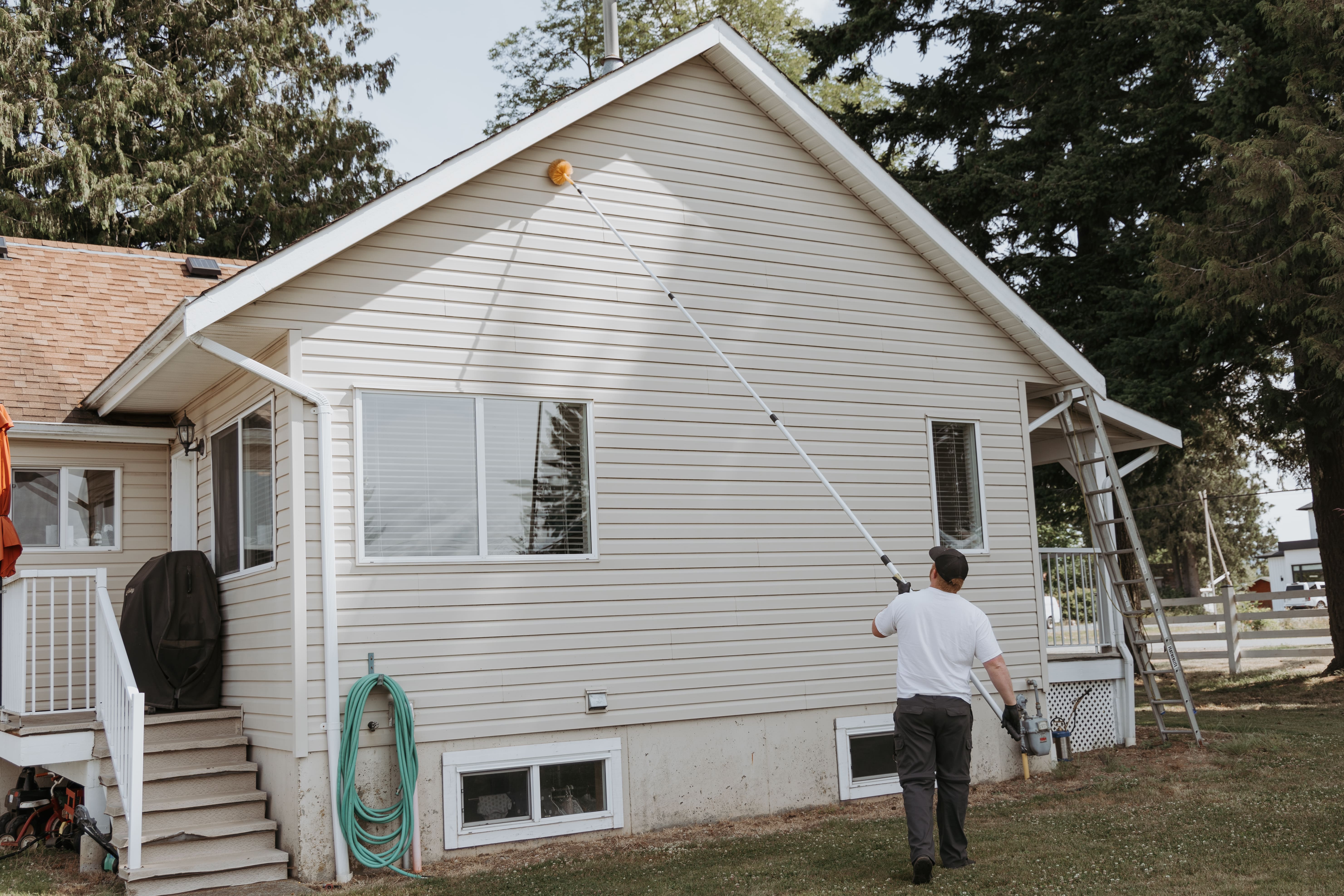
Most people call us in August, when the colony is at full size and the wasps have turned aggressive. That is the hardest time to deal with one, and it is worth knowing why.
A nest starts in spring with a single queen and a structure about the size of a golf ball. Through June and July the colony grows steadily. By late August a mature yellowjacket nest can hold several thousand workers, and the behaviour changes too. The colony stops raising brood, the workers switch from hunting insects to seeking sugar, and they become far more defensive about the nest. Catching the same nest in May is a two minute job. Catching it in September is not.
The colony dies off with the first hard frost and wasps never reuse an old nest, so a visible nest in November is not a problem that needs solving. What does need solving is the gap that let the queen in, because the location will suit next year's queen just as well.
Three types turn up on Abbotsford properties, and they are not equally dangerous.
Paper wasp nests are the open umbrella of cells with no outer covering, so you can see straight into them. They hang under eaves, deck railings, patio furniture and inside barbecue lids. Paper wasps are the calmest of the group and will usually leave you alone unless you get within a metre.
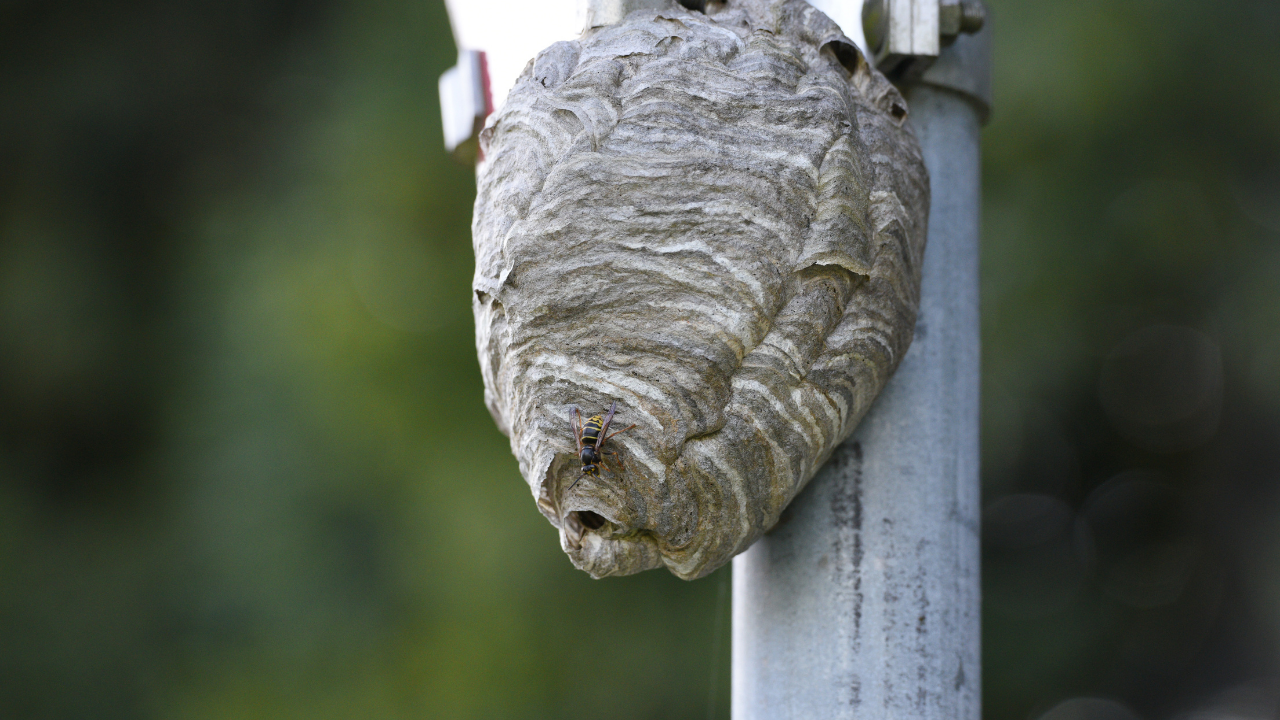
Yellowjacket nests are fully enclosed in papery grey layers with one small entry hole, and the nest itself is often hidden. Wall voids, attics, under sheds, or underground in an old rodent burrow. Frequently all you see is a steady stream of wasps disappearing into a gap in the siding with no nest visible at all. Yellowjackets sting repeatedly and account for most stings in the Fraser Valley.
Bald faced hornet nests are the large grey football shaped nests hanging from a branch or an eave. They are technically a yellowjacket, they are the most defensive of the three, and they will follow a perceived threat well away from the nest.
One thing to rule out first. Honeybees are furry and golden brown, and they cluster in a dense mass rather than building a papery nest. They are pollinators, not pests, and a local beekeeper will usually collect a swarm for free. If what you have is bees, we will tell you and point you in the right direction rather than treating them.
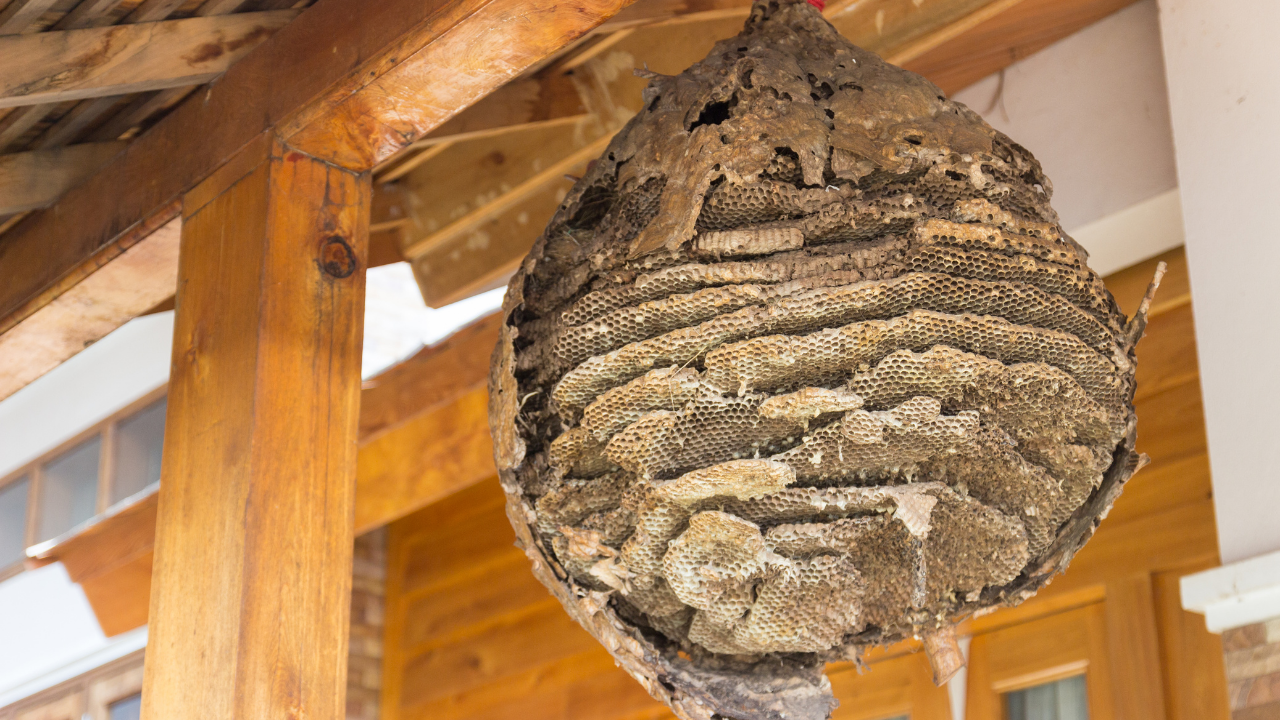
The method depends entirely on where the nest is, which is why identification comes first.
An accessible nest under an eave or railing is treated directly and then physically removed. That second part matters more than people expect. An abandoned nest full of dead brood attracts carpet beetles and other secondary pests, and inside a wall it holds moisture against the building.
A nest inside a wall void, soffit or attic is a different job. We use an insecticidal dust rather than a spray, because dust carries through the cavity to reach the nest itself and returning wasps track it inward. Spraying into the entry hole is the mistake we get called out to fix most often: the colony escapes inward through light fixtures and ceiling gaps, and an outdoor problem becomes an indoor one.
Underground nests get treated at the entrance after we have checked for secondary exits, which ground nesting yellowjackets almost always have.
Once the nest is dealt with, we seal the access point. Wasps choose a location for a reason, and a gap that suited one queen will suit the next.
Wasp season here runs from the first warm spell in spring through to the first hard frost, usually somewhere in October or November. Knowing the local pattern matters for timing. If you spot a small nest in May or June, that is the cheapest and safest moment to deal with it, and we would rather take that call than the one in late August.
Click on a pest to learn about warning signs, root causes, and our proven elimination strategies.

Rats are searching for food, warmth, and shelter. They often gain access through gaps in the foundation, wall vents, open garage doors, or easily accessible gutter lines and roof points. Cluttered yards, garbage, and pet food attract them to the property.
We begin with a thorough inspection to identify entry points and nesting zones. All accessible entry points are professionally sealed, and tamper-resistant traps are placed in high-activity areas. We return for two follow-up visits to monitor and adjust traps, ensuring the issue is fully resolved.

Mice enter through tiny gaps — as small as a dime — in search of food and shelter. Cold weather, food crumbs, and poorly sealed structures make homes ideal nesting grounds.
We perform a full inspection to find entry points and nesting sites, then seal off all accessible entry points. Traps are strategically placed in high-activity areas. Follow-up visits ensure traps are cleared and that no new activity is present.

Ants follow scent trails to food or water. They’re often drawn inside by crumbs, spills, or moisture.
We target nests using gel baits, perimeter sprays, and barrier treatments — safely eliminating ants at the source.

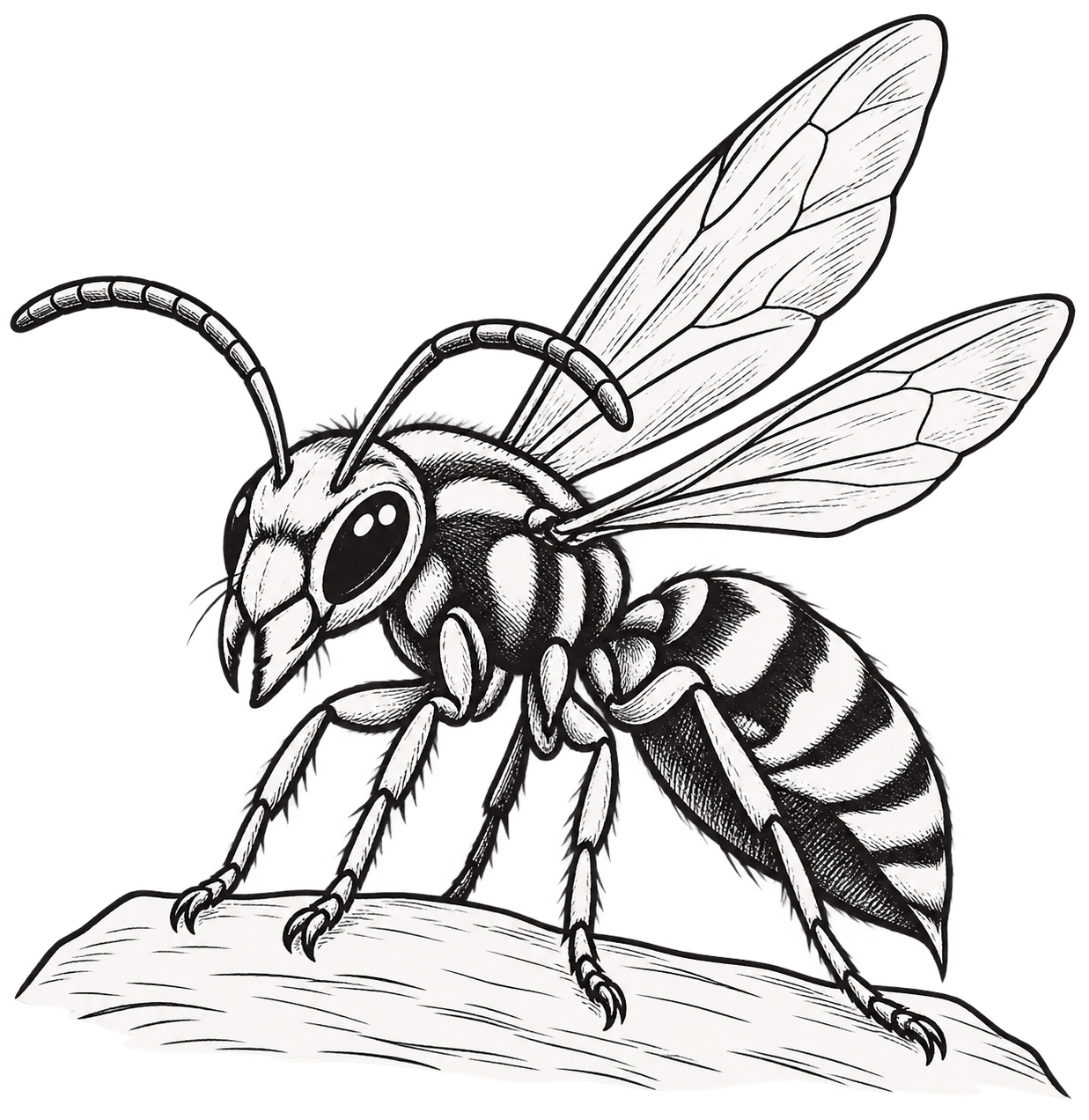
Wasps are attracted to sugary food and protein. They often build nests in sheltered areas like attics, soffits, or trees.
We locate and safely remove nests using professional-grade aerosols and protective equipment — with follow-up to prevent re-nesting.

Silverfish love moisture and darkness. They feed on starchy items like paper, books, cardboard, and even clothing.
We apply targeted residual insecticides and monitor for activity. Our moisture management and exclusion services help ensure long-term control.

Grubs are beetle larvae that feed on grassroots. They thrive in well-watered lawns and lay eggs in summer.
We apply seasonally timed grub control treatments, reducing larval populations and protecting your lawn from further damage.

Moles tunnel in search of earthworms and grubs. Well-irrigated, healthy lawns are ideal hunting grounds.
We identify active tunnels, set effective underground traps, and return for multiple follow-ups to eliminate mole activity fully.

Squirrels commonly enter homes through roof gaps, soffits, or vents, looking for a safe, warm place to nest — especially during colder months or baby season. Nearby trees or roof access points make entry even easier.
We install one-way exclusion doors that allow squirrels to exit safely but not return. Once we’ve confirmed all squirrels have left the structure, we seal up all entry points to prevent re-entry, keeping your home protected long-term.

Roaches thrive in warm, humid areas with access to food. Even clean homes can attract them via grocery bags or plumbing voids.
We use professional-grade baits, dusts, and insect growth regulators, combined with crack-and-crevice treatments for full elimination.

Bed bugs hitchhike on luggage, furniture, or clothing. They are drawn to body heat and carbon dioxide.
We offer detailed inspections and multi-step heat or chemical treatments to eliminate all life stages — with follow-up support included.

Spiders are drawn to dark, quiet areas and enter homes while hunting for insects.
We use targeted residual sprays, remove webs, and seal entry points to reduce spider presence inside and out.
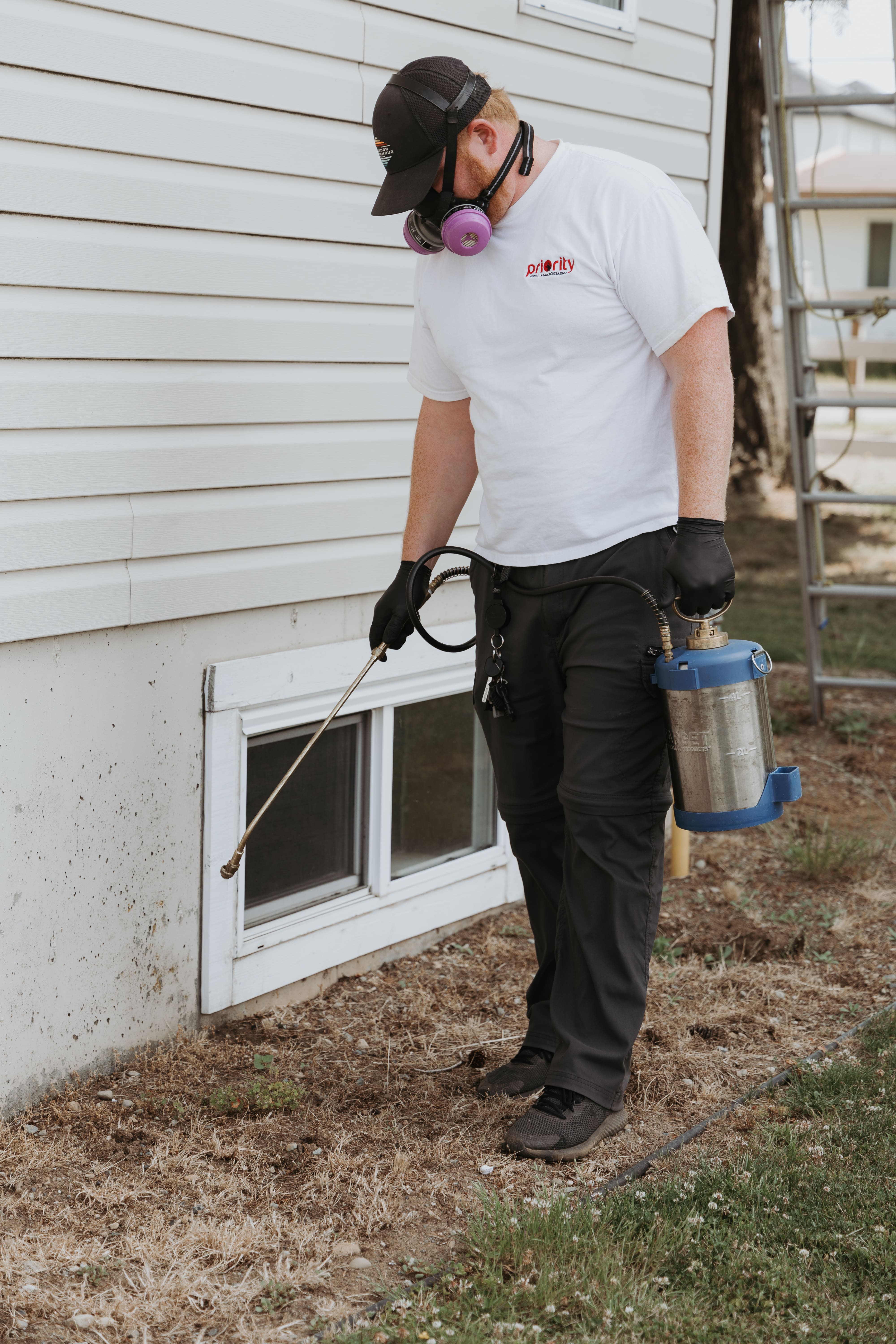
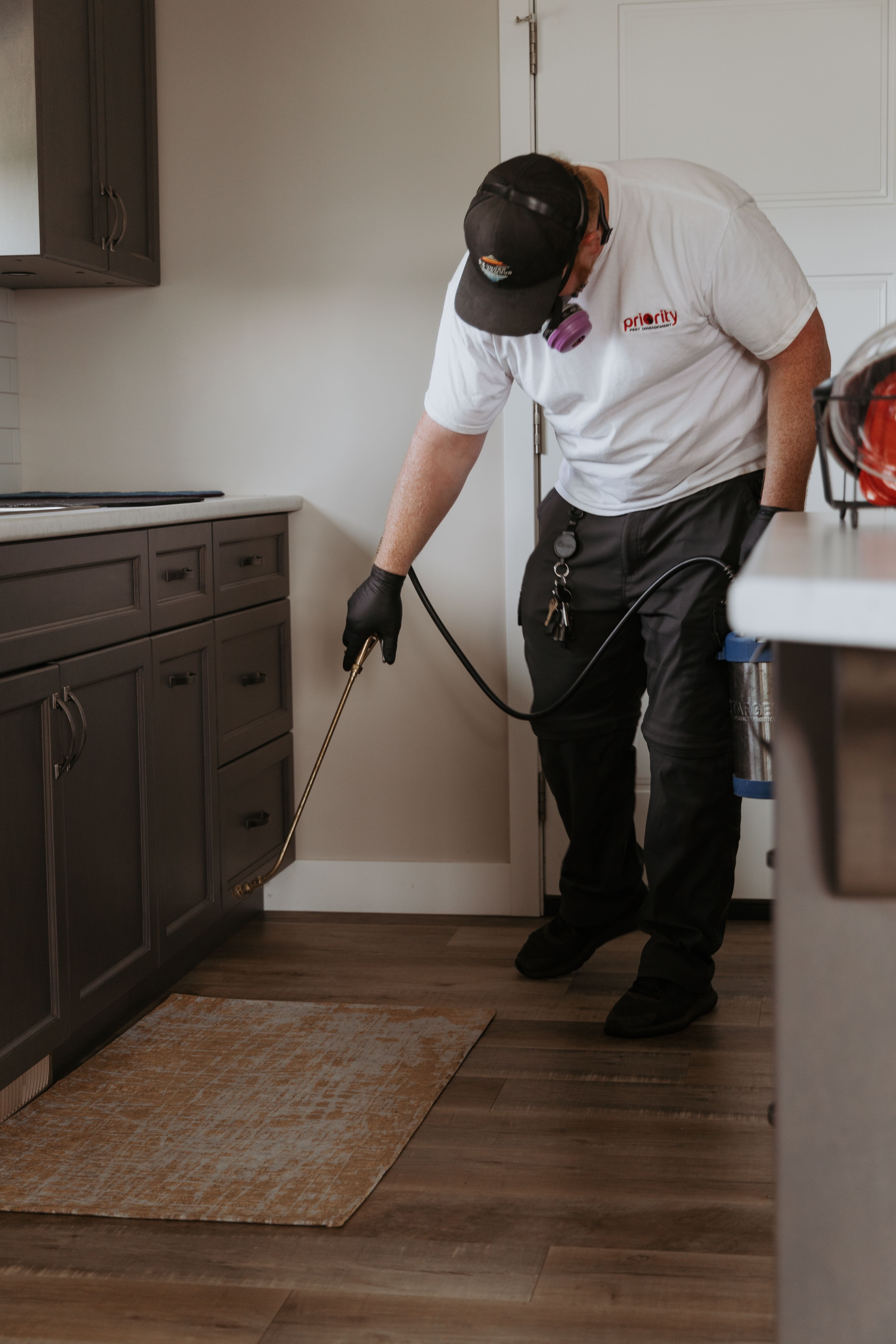
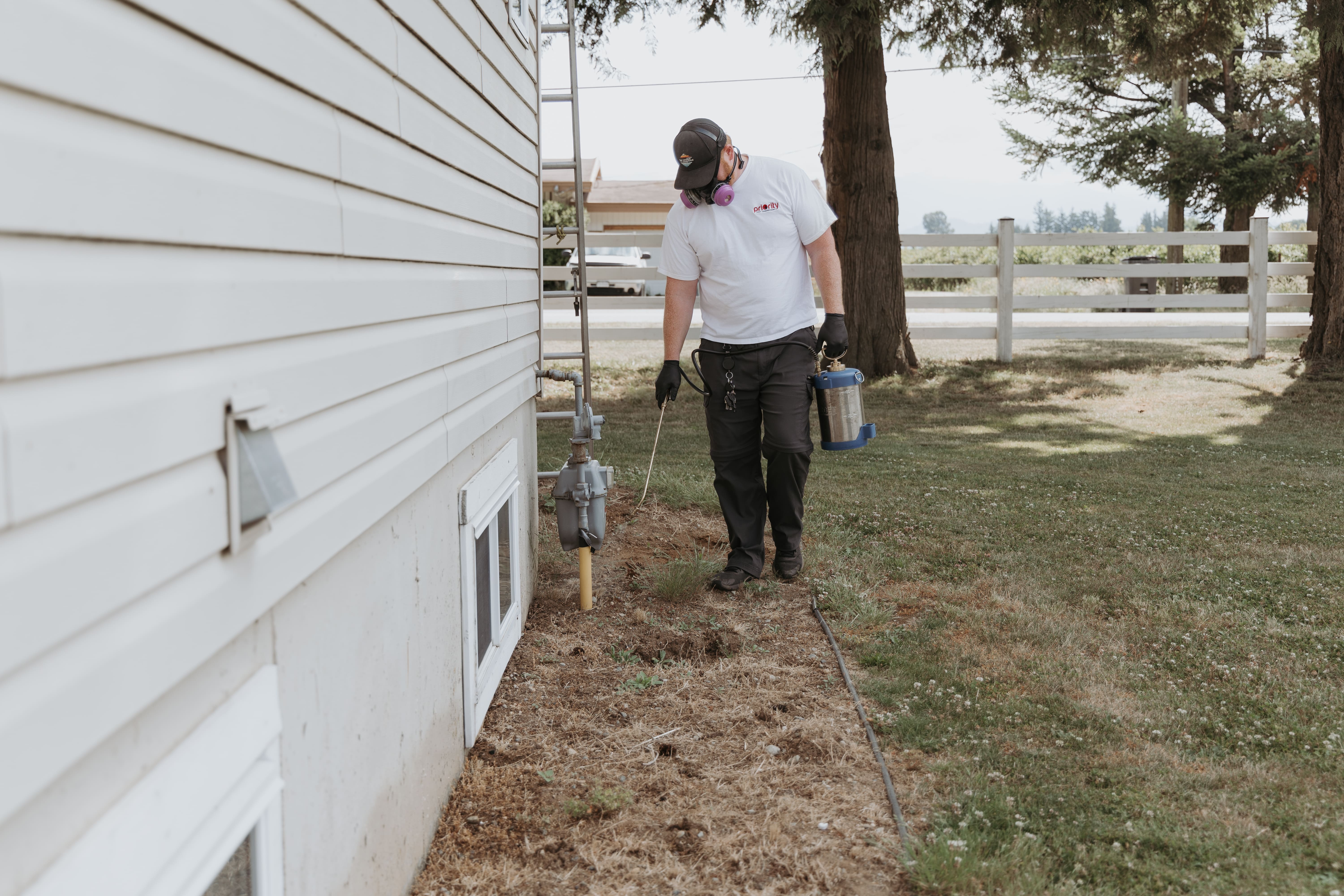

Most wasp calls we get have already been sprayed once. The nest is still active, the wasps are now agitated, and in the wall void cases they have often moved deeper into the structure. We will tell you what species you have, where the nest actually is, and whether it needs removing at all, because a nest in October is sometimes best left to the frost.


A nest beside a doorway or over a walkway is not something to put off, and ladders and stings are a bad combination. We are your Abbotsford neighbours, we respond quickly, and the initial inspection is free, so you can find out what you are dealing with before committing to anything.

Our Support and Sales team is available
24 /7 to answer your queries

